Keynote Speaker
18 February 2026Tommaso Caselli
Senior Assistant Professor, University of Groningen
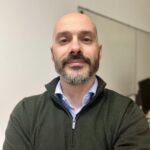
Dr. Tommaso Caselli is a Senior Assistant Professor at the Center for Language and Cognition Groningen (CLCG), Faculty of Arts, University of Groningen. His research focuses on Natural Language Processing, in particular event extraction and framing, as well as the detection and mitigation of hate speech and misinformation.
He is a co-founder of the Events and Stories in the News workshop series and co-editor of the volume Computational Analysis of Storylines (Cambridge University Press, 2021). He has organized several semantic evaluation campaigns for English, Dutch, and Italian, and has contributed to the development of linguistic resources for these languages.
His work appears in major computational linguistics conferences and journals, and has received two Outstanding Paper Awards (COLING 2022 and ACL 2023). From 2023 to 2025, he served as coordinator of the “AI and Language” theme within the Jantina Tammes School of Digital Society, Technology, and AI at the University of Groningen.
Keynote Speech: Misinformation Detection: Progress, Pitfalls, and the Path to Societal Impact
Over the past decade, expressions like “fake news”, “misinformation”, and “alternative facts” have increasingly entered everyday discourse, accompanied by a surge of research interest in the automatic detection of “incorrect information”. Two major events, the 2016 US Presidential Election and the COVID-19 pandemic, accelerated this trend, spurring a wave of research into detection tools and benchmark datasets. Yet, despite this momentum, a troubling gap has emerged between technical progress and societal impact. Drawing on my own work in this field, this talk critically examines the state of the art in misinformation detection: what has been accomplished, what genuinely works, and what remains unresolved. The field tends to prioritize incremental improvements over the needs of those on the front lines of the misinformation crisis: journalists, fact-checkers, and the broader public. Moreover, a fundamental challenge remains largely unaddressed: how do we actually help people correct false beliefs once they have taken hold? This talk is an invitation to reflect, and potentially to reorient. If misinformation detection is to deliver on its promise, we, as a community, must engage more deeply with real-world practitioners and start measuring success on outcomes rather than benchmarks.